
LSA vs Google Ads for Contractors: Which Actually Wins?
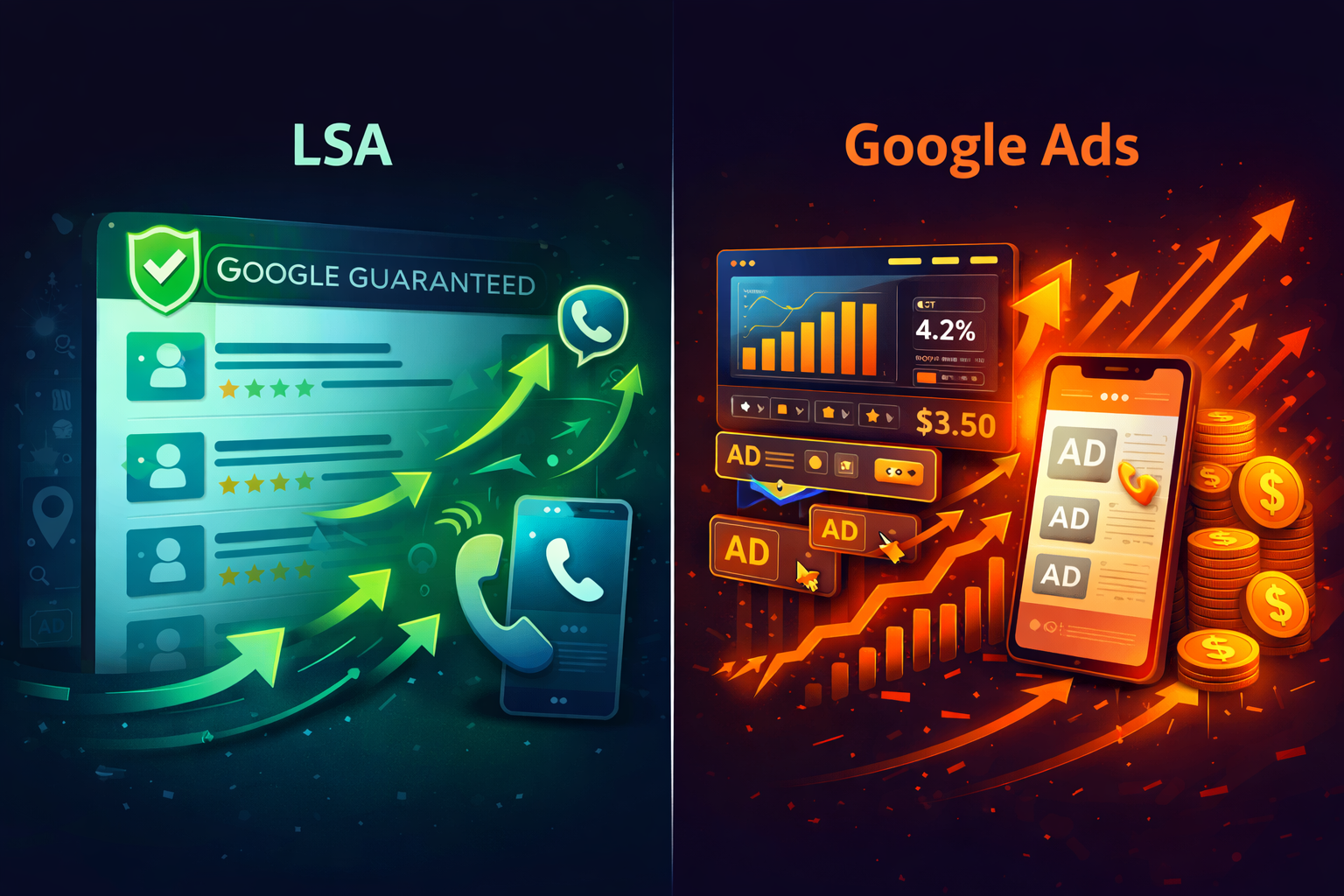
LSAs and Google Ads are both "paid," but they are structurally different systems. LSAs are a lead marketplace governed by trust and responsiveness. Google Ads is an intent marketplace governed by keywords, relevance, and conversion architecture.


What LSAs are Optimizing For
LSAs primarily optimize for conversion likelihood (will this lead book?), customer trust (reviews, badge), platform reliability (response rate), and user satisfaction (disputes, refunds, poor experiences).
This means operational behavior affects your marketing outcomes. Slow response means fewer impressions, fewer leads, higher cost to maintain volume, and lead quality volatility.
What Google Ads is Optimizing For
Google Ads optimizes for searcher satisfaction (relevance), expected click-through rate, landing page experience, and conversion likelihood. Ads punish broadness because broadness reduces relevance.
Lead Quality Differences
LSAs often produce more urgent, phone-ready leads — but also more "shopping around" calls because the interface encourages multiple quotes.
Google Ads can produce more controlled intent leads — but only if you filter keywords and geography precisely.
Lead quality is not "better" in one universally. It depends on your service model and your filtering.
Diagnostic: Which One is Failing You?
If LSAs feel low quality:
- Your Service categories too broad
- Your Radius too wide
- Your Response rate too slow
- Your Not disputing bad leads correctly
If Ads feel low quality:
- Your Keywords too broad
- Your Location targeting too wide
- Your Lack of negative keywords
- Your Landing page not call-dominant
- Your Weak call handling
Hear From Our Clients

FAQs
-
If you need emergency calls fast and can answer quickly, LSAs can deliver sooner. If you need tighter control and better filtering, Ads may outperform — especially for specific services.
-
Often because response time is slow, categories are too broad, or you're receiving "quote shopping" leads without strong differentiation.
-
Because the landing page didn't pre-qualify, and the keyword intent was too broad. Confused leads are usually a structural problem.